Application introspecting
In the book Real-Time 3D Graphics with WebGL 2 by Farhad Ghayour and Diego Cantor, Chapter 12 (pages 454–455) introduces an intriguing technique for working with WebGL elements. This approach involves mimicking the DOM API by exposing WebGL elements in a way that resembles the structure and behavior of traditional DOM elements. This abstraction allows developers to interact with WebGL objects in a more familiar and intuitive manner, especially when building complex 3D applications.
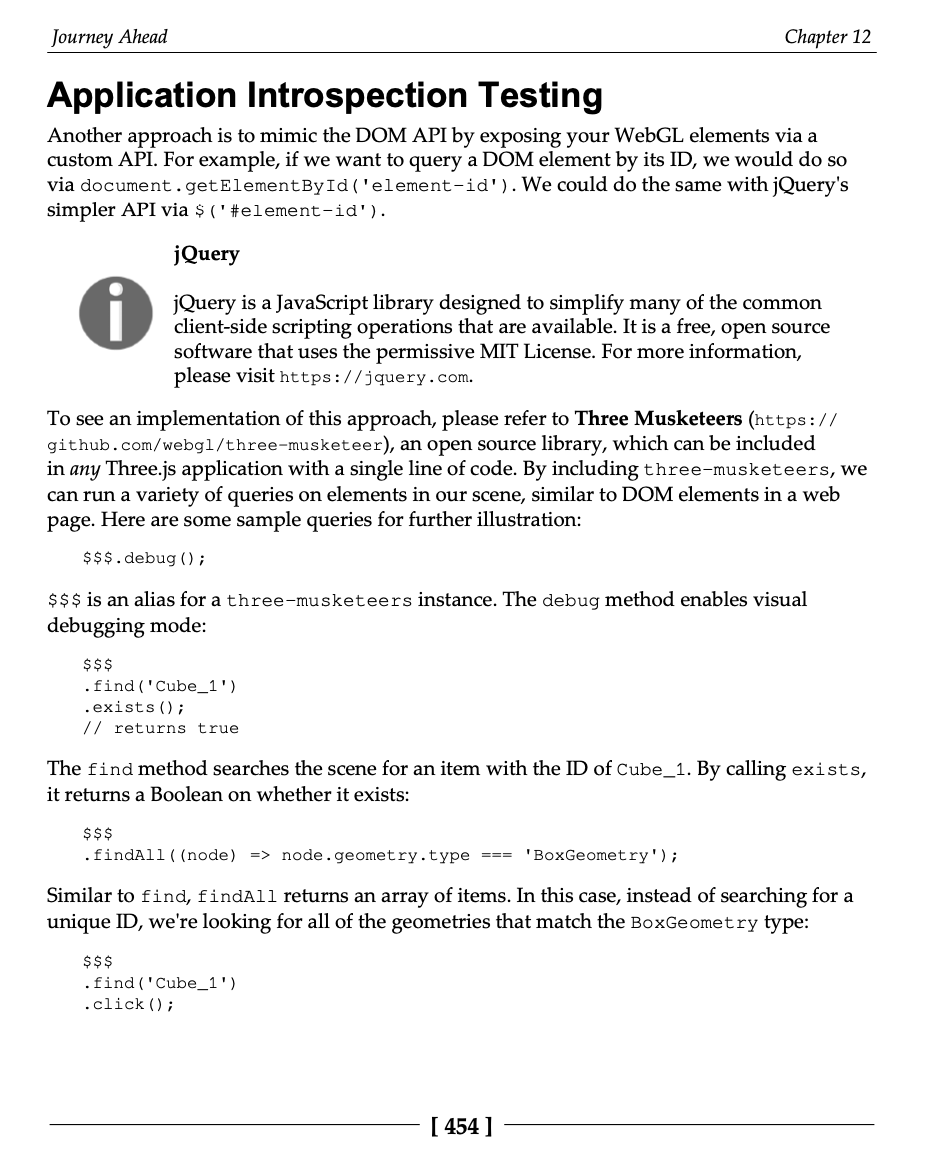
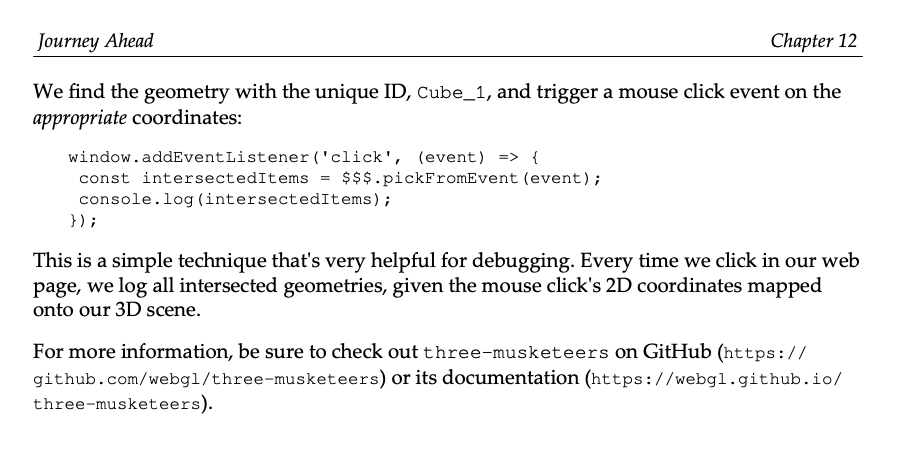
The Philosophy Behind the Technique
The core idea is to bridge the gap between the imperative nature of WebGL and the declarative nature of modern UI frameworks. By exposing WebGL elements as if they were part of the DOM, developers can manipulate them using patterns and tools commonly used in web development. This approach simplifies the learning curve and enhances maintainability, as it aligns with the mental model of working with the DOM.
React-Three-Fiber and React Three Test Renderer
React-three-fiber, a popular library for integrating React with Three.js, adopts a similar philosophy. It provides a declarative API for building 3D scenes, where Three.js objects are represented as React components. This abstraction not only makes it easier to manage 3D scenes but also opens the door to leveraging React's ecosystem, including testing tools.
One such tool is the React Three Test Renderer, which facilitates unit testing for React-three-fiber applications. By rendering 3D scenes in a virtual environment, it allows developers to inspect and assert the structure of their 3D components without requiring a physical canvas or browser environment. This aligns closely with the technique described in the book, as it mimics the DOM API for WebGL elements, enabling a declarative and testable approach to 3D graphics.
Benefits of Adopting This Strategy
Adopting this philosophy in unit testing for 3D applications can offer several advantages:
- Improved Testability: By exposing WebGL elements in a DOM-like structure, it becomes easier to write tests that verify the structure and behavior of 3D scenes.
- Declarative Syntax: Mimicking the DOM API allows developers to use declarative patterns, which are easier to reason about and maintain.
- Ecosystem Integration: Leveraging tools like React Three Test Renderer enables seamless integration with existing testing frameworks, reducing the need for custom solutions.
- Consistency: Aligning with React's declarative philosophy ensures consistency across the application, whether working with 2D or 3D components.
This technique of mimicking the DOM API for WebGL elements, as described in Real-Time 3D Graphics with WebGL 2, can provide a powerful abstraction for managing and testing 3D graphics. React-three-fiber and its testing strategy with the React Three Test Renderer exemplify how this philosophy can be applied in practice. By adopting this approach, we can enhance the testability, maintainability, and developer experience of our 3D applications.